
Introduction
Da Nang, Vietnam, is a city that offers both coastal access and urban convenience, making it an obvious destination for budget-conscious travelers and expats alike. But is it really the cheapest coastal city? Can you really live comfortably there on just $1,000 a month?
After spending 28 days here, I can confidently say yes. Let’s break down my experience and how I managed my expenses while in Da Nang, Vietnam.
Table of Contents
Budget Breakdown for a Month in Da Nang
Rent/Housing: $301 a month per person
My partner, another couple, and I found a great Airbnb apartment on a high floor with stunning views of the city, just a two-minute walk from My Khe Beach. Waking up to panoramic views of Da Nang and being so close to the beach made it feel like we were living way above our budget.
For $900 a month ($225 per person), the apartment was modern, spacious, and perfectly located. The best part is that Da Nang’s housing market offers a range of options, so even if you want to spend less, you can still find decent accommodation in other parts of the city. If you’re staying longer and rent directly from local landlords instead of through Airbnb, you can likely find accommodations for a fraction of the cost.
If you take day trips like we did, this will add to your housing-related expenses. In addition to monthly rent, I spent $76 in Hoi An for a really nice hotel with the best room in the place. It had a view of some rice fields, included breakfast and bike rentals, and featured a gorgeous infinity pool overlooking the rice fields.
Viettel Phone Plans and Costs
Phone Plan/Data: $6 a month
For mobile service, I opted for a Viettel plan, one of the most affordable and reliable options in Vietnam. I chose a month-long package that cost 140,000 VND or about $5.65 per month, giving me 1.5 GB of data every day.
This was more than enough for navigating the city, ordering taxis, and staying connected.
Food and Dining: $300/month
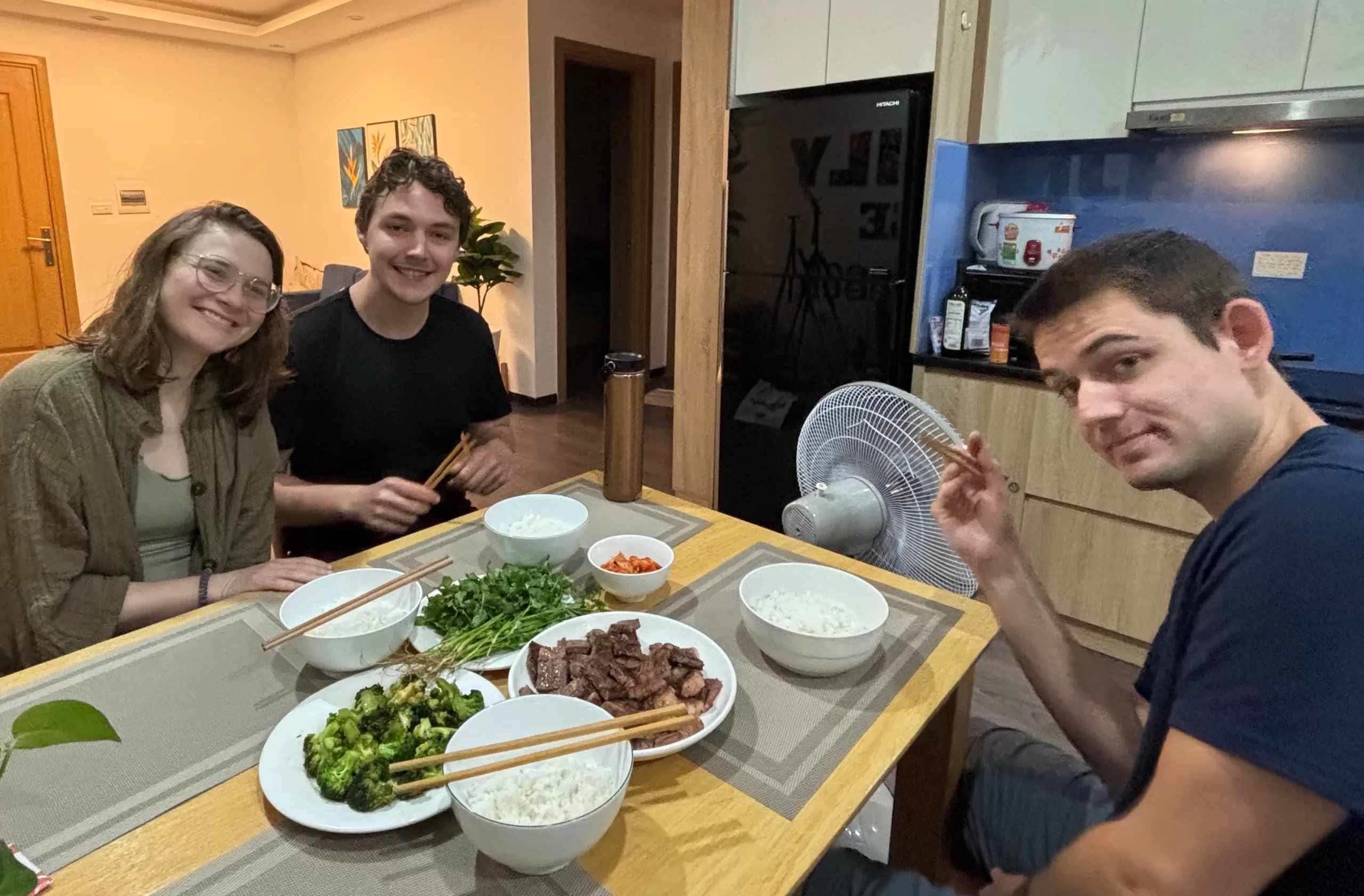
Food in Da Nang is both affordable and incredibly delicious. We rarely cooked our meals because it was often more expensive and required more effort. When we did want something more familiar like Italian food, we would walk to a local grocery store called Moonmilk. There, you could find your classic Italian pasta, sauce, and sausage. Basil is almost always Thai basil though, haha.
Since there were four of us on the trip, we could split the cost of home-cooked group dinners. Traveling with fewer people or for a shorter period might make that harder to justify. Over 28 days, we spent roughly $122 on groceries per person.
Dining out is where Da Nang truly shines. Meals from street vendors, like pho or banh mi, often cost just $1 to $2. In 28 days, I spent about $313 USD on dining out, and we didn’t really limit ourselves. There are pricier options like Korean barbeque for around $15 and fancy seafood restaurants that can go over $50 per person, but we didn’t visit those often because the cheap street food was so good and readily available.
I would advise being cautious with non-local food. I had some gyoza at a Japanese restaurant by the beach and got pretty bad food poisoning because I think they weren’t cooked through. Just a heads-up. Check out my blog for more details on what there is to eat in Da Nang.
Transportation: $30/month
Da Nang is pretty walkable, but having a motorbike or a bicycle expands your options. Most tourists stay near the beach, which felt less authentically Vietnamese than areas about 30 minutes inland.
You don’t need to rent a motorbike though, because (1) if you don’t have a license, it’s not legal, and if you get into an accident, insurance might not cover you, and (2) apps like Grab make taking a motorbike taxi very affordable. Most attractions, markets, and restaurants are a short ride away and typically cost under $2 USD with a 50 percent tip.
This meant I easily managed my transportation costs at around $28 for 28 days, without the stress of renting or refueling a motorbike. This also included longer transportation for day trips.
Entertainment and Miscellaneous: $400/month
Da Nang offers plenty of free or low-cost activities. The number above could be much lower if you’re living here long-term and don’t participate in as many day trips or activities like surfing lessons. We spent a lot of time at the beach, enjoying sunsets, morning walks, and swims in the warm ocean.
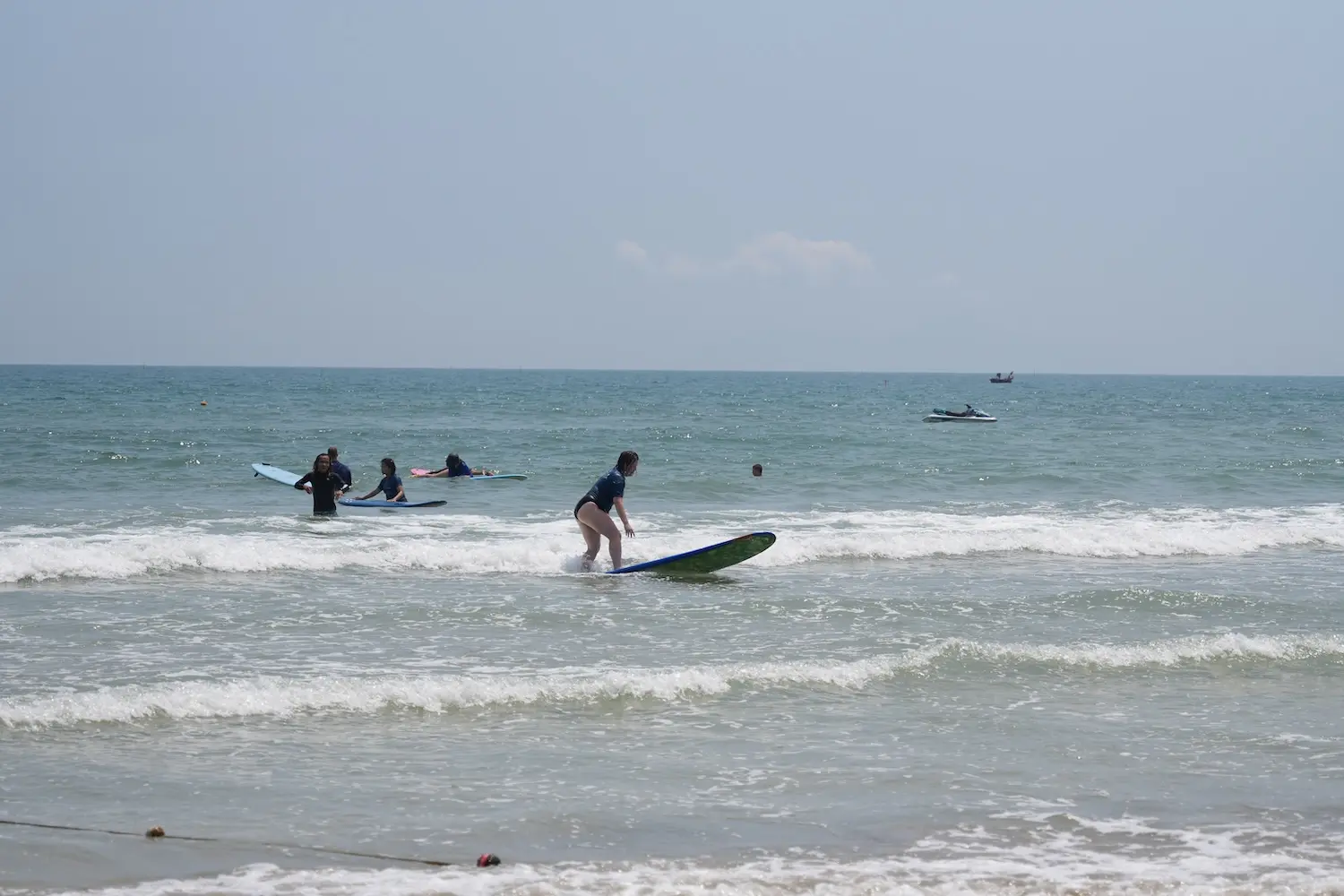
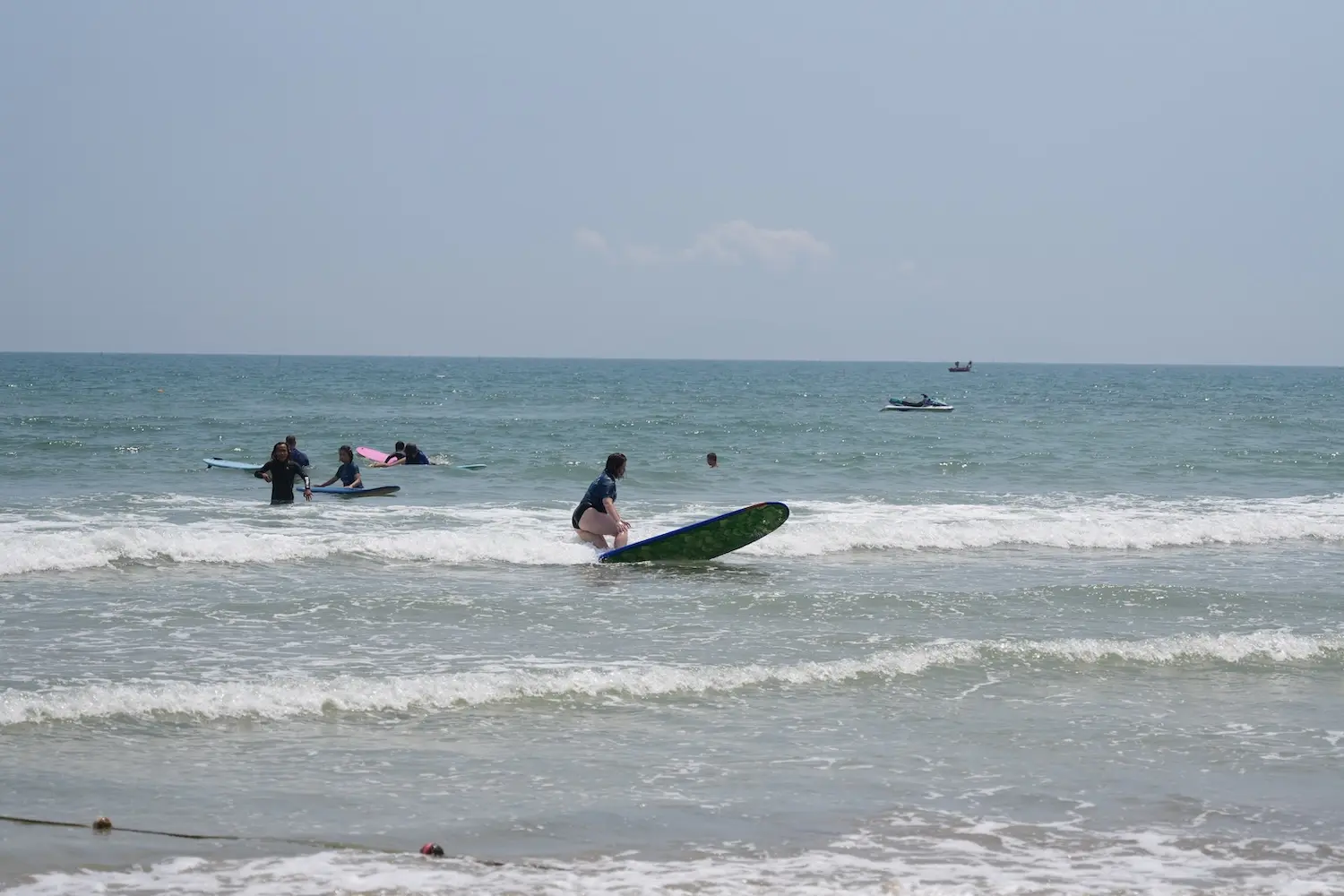
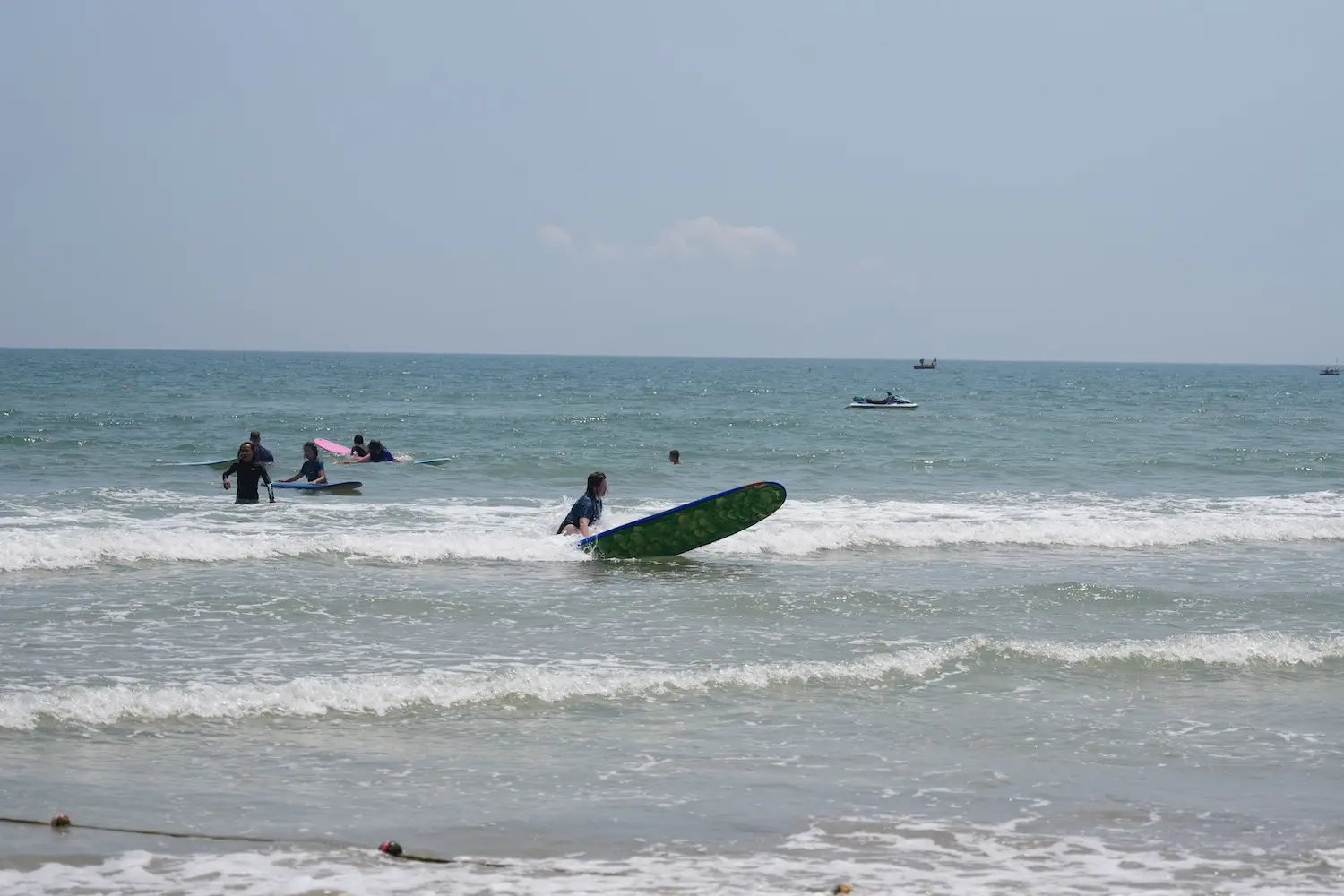
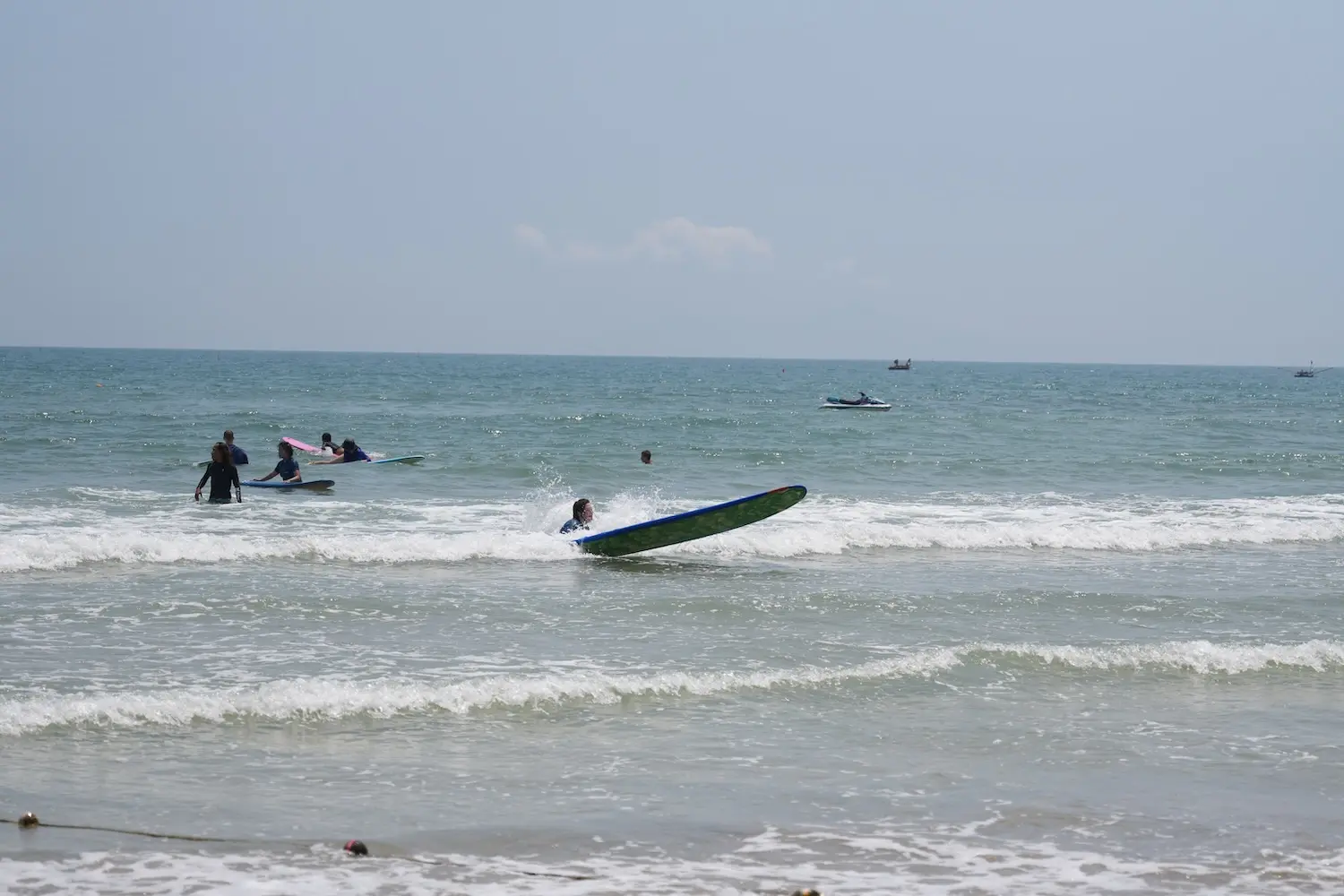
Entry to attractions like Marble Mountain was inexpensive. The city’s cafes were also great places to relax or work, with coffee and a pastry costing under $5. I also took my first surfing lesson here for $47 for a 1.5-hour session. Da Nang is known for its consistent waves and sandy beaches, so definitely check that out. Be aware that wave conditions can vary depending on the season.
We didn’t need medical care while in Da Nang, but healthcare is very affordable. We had travel insurance through SafetyWing for about $46 a month (though the cost fluctuates and can be closer to $60 now).
Some other expenses included:
- Custom dress, pants, two shirt repairs, and tip at Moc Tailor Shop: $65
- Waterfall tour: $60
- Couples massage at a hotel: $56 per person
- Laser hair removal (3 areas): $37 (though the quality was not great)
Check out this blog post for more details on what to do in and around Da Nang, Vietnam!
Personal Experience: Living in Da Nang on a Budget
Da Nang truly felt like home from the moment we arrived. Our apartment overlooked the city from a high floor, offering views of both the skyline and the beach. Being two minutes from the water meant we were at the beach every day. Whether it was early morning walks or late afternoon swims, it was easy to enjoy the best of coastal living without spending all our time getting to the ocean.
The people in Da Nang were incredibly kind and welcoming. We often chatted with local vendors and fellow expats, who gave us great recommendations for finding the best local food. Vietnamese cuisine quickly became a highlight of our stay, as it was affordable and full of flavor. One unexpected find was a burger shop that served garbage plates, a dish from my hometown in Upstate New York, which was a fun surprise.
Getting around Da Nang was pretty easy. The beach area is walkable, and if you want to explore more local neighborhoods, taxis and Grab rides are cheap and easy to take. You can rent a motorbike, but be aware of local driving laws and your insurance coverage.
We were initially hesitant about spending so much time in Da Nang since many people recommend staying in Hoi An or heading north to Hanoi. However, I’m so glad we chose Da Nang because of its calm, slow pace. It felt like Miami Beach, but more peaceful and much more affordable. With beaches, mountains, and city life all nearby, Da Nang offers a lot without the high price tag.
Conclusion
Living on $1,000 a month in Da Nang is not just possible, it’s incredibly doable and even comfortable. Here’s a more detailed look at how my monthly expenses broke down:
- Housing: $301 (includes $76 for a Hoi An hotel)
- Phone Plan: $6
- Groceries: $122
- Dining Out: $313
- Transportation: $28 (includes transportation to Hue and Hoi An)
- Entertainment & Miscellaneous: $400 (includes insurance, surf lessons, massages, shopping, tours)
Total: Approx. $1,170
Keep in mind, the extra $170 came from optional travel experiences and self-care splurges. If you’re staying long-term and living like a local, you could easily bring your total closer to $1,000 or even less.
If you’re thinking of relocating to Da Nang or just curious about living on a budget in Vietnam, this city is proof that you don’t need a lot of money to enjoy a high quality of life. Da Nang is definitely one of the cheapest coastal cities in the world.